For Jenni Swart, registered nurse at Waverly Health Center (WHC), becoming a living kidney donor started with one simple thought: Why couldn’t I do this for someone? The idea came after a conversation about someone who needed a liver transplant.
“That really got me thinking about organ donation and why I couldn’t help,” Jenni said.
At the time, Jenni and her husband had recently become empty nesters after raising their six children. With their kids grown and her own health in a good place, she felt this might be the right time to look into living donation.
In January 2025, Jenni reached out to the transplant team at the University of Iowa to learn more about becoming a donor. From there, the process was thorough and supportive. After a phone call a few weeks later, Jenni completed interviews and lab work. In mid-April, she traveled to Iowa City for a full day of testing.
She met with a transplant coordinator, dietitian, counselor, kidney doctor and surgeon. The testing included blood work, an abdominal scan, EKG, a 24-hour urine test and a 24-hour blood pressure monitor.
Before surgery, Jenni admits she had some worries. “My biggest fears were the pain after surgery,” she said. Even with those concerns, she felt confident moving forward. Her recovery went well overall.
“For the most part, my experience was pretty smooth,” Jenni said. For the first couple of weeks, she had some nerve pain in her right groin while walking. She also dealt with nausea and loss of appetite for about three weeks.
Now that she is back at work and back to her routine, those weeks feel far behind her.
“Since returning to work, I truly forget that I even did it,” she said. Throughout the journey, Jenni says the support from others meant everything. Her husband was an incredible caregiver during recovery, and her family, friends and WHC coworkers were there for her every step. She also found comfort in talking with Janine Russell, a retired WHC employee who had gone through the living donor process herself. For Jenni, donating a kidney means much more than the surgery itself. “To me, it means being able to do something selfless for someone else,” she said.
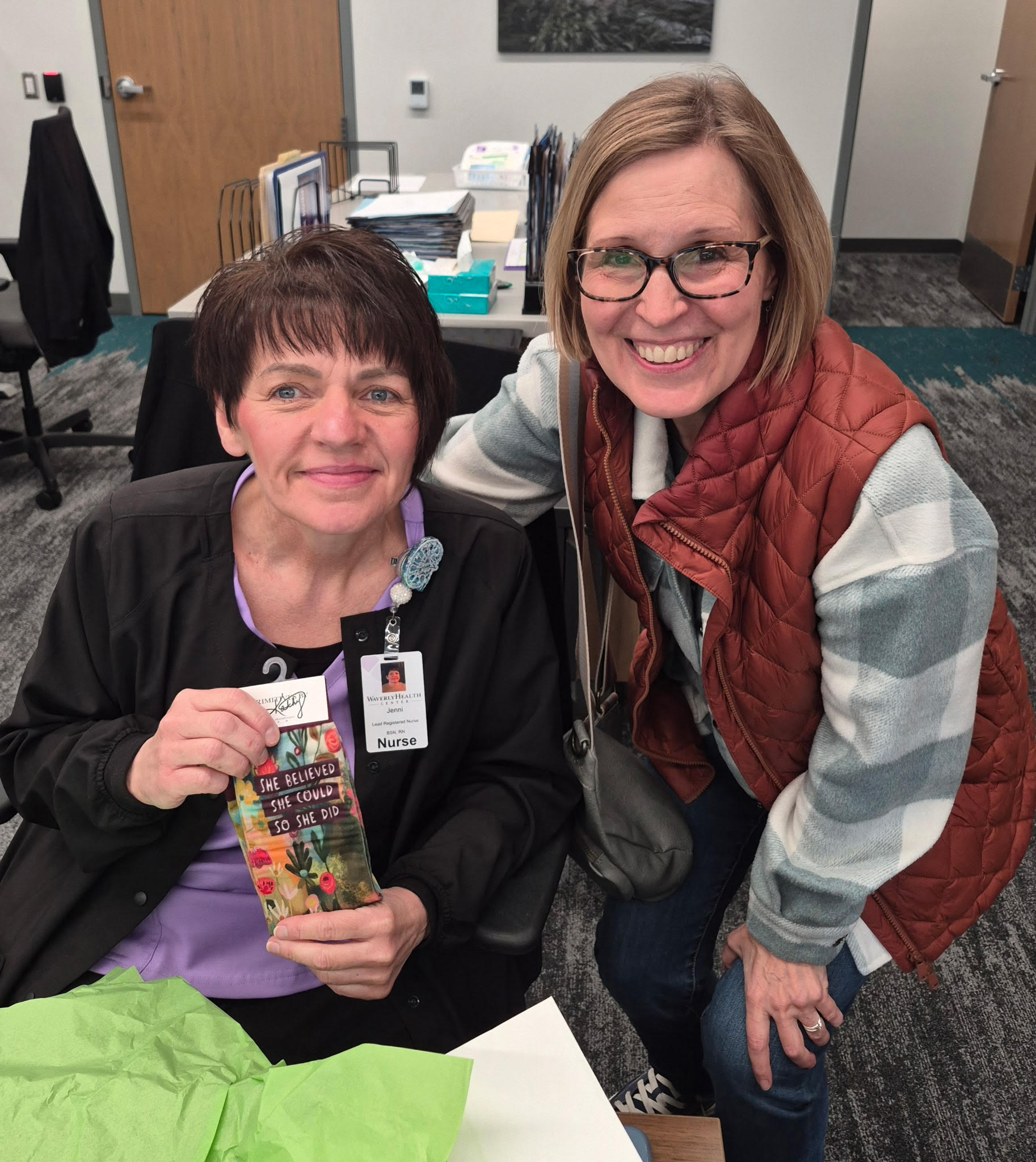
The experience has also changed the way she thinks about organ donation. “I always knew I wanted to be an organ donor, but I had never thought about being a living donor until that light bulb moment,” she said. “It has been a spiritual journey for me and something that has helped me become a better version of myself.”
Jenni also participated in the transplant program’s voucher system. This allows living donors to name up to five people who could use the voucher if they ever need a transplant in the future. She also receives her own personal voucher, meaning if she ever needs a transplant in her lifetime, she would receive priority for a living donor kidney.
For anyone thinking about becoming an organ donor, Jenni offers simple advice: “Educate yourself and ask questions.” When people ask her why she chose to do it, her answer is simple. “Because I can. I am healthy and able to safely donate,” she said. “The body is remarkable. Your remaining kidney adjusts and takes over.”
During Donate Life Month, Jenni’s story is a powerful reminder of the difference one person can make.