



Waverly Health Center Logo

Pay Your Bill

Patient Portal

Breast Care Services

At Waverly Health Center, breast care is about more than imaging and procedures. It’s about listening, compassion and confidence in your care. From routine screenings to advanced diagnostic services, our experienced team is here to support you.

We understand that breast health appointments can bring uncertainty. That’s why we focus on creating a calm, supportive environment where your questions are welcomed and your comfort matters.

Phone Icon

Contact Us

Phone: (319) 483-4074
Fax: (800) 447-5890
Director: Nicole Myers, Chief Clinic Officer
Medical Director: Dr. Ann Rathe

physician icon

Hours & Additional Information

Monday – Friday: 8 a.m. to 4:30 p.m.

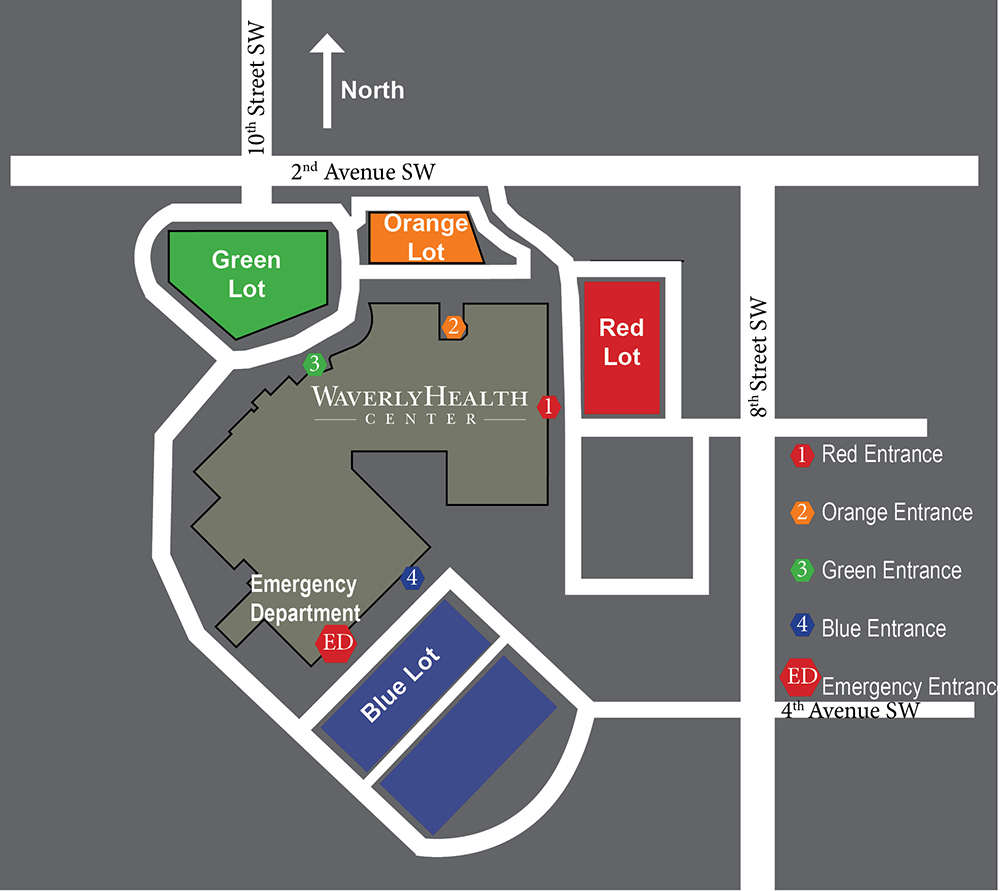
Please park in the green parking lot and enter through the green entrance.

Breast Cancer Risk Factors

There are some factors that can raise your risk of breast cancer. The WHC breast care team can provide you with a comprehensive risk assessment and provide long term surveillance and imaging with up-to-date recommendations specifically for you. Please call to make an appointment.

What to Expect

We want you to feel informed, comfortable and supported throughout your visit. Here’s what you can expect when you come to Waverly Health Center for breast care services.

Before Your Appointment: Our team will help you prepare for your visit. You may receive instructions about what to bring with you.

When You Arrive: You’ll be welcomed by a caring team who understands that breast care appointments can feel personal. We strive to create a calm, respectful environment.

During Your Exam: Your exam will be explained step-by-step so you know what’s happening and why. Our trained team will prioritize your comfort and privacy and will work with you to make the experience as smooth as possible.

After Your Appointment: If additional testing or follow-up is recommended, our team will guide you through next steps and help coordinate care.

previous arrowprevious arrow
Slide 1
Breast Health & You

Breast tissue changes throughout the month in adult women. Some changes are normal, but some may require a provider’s attention. It is important that you know the signs and symptoms of breast cancer. When it is discovered early, you have more treatment options and a better chance for long-term survival. In fact, when breast cancer is diagnosed and treated in its early stages, the five-year survival rate is 95 percent. Most breast lumps are not cancerous. Yet the most common sign of breast cancer for both men and women is a lump or thickening in the breast. Often, the lump is painless.

next arrownext arrow

Frequently Asked Questions  

What should every woman know about their breasts and their individual risk?
A detailed risk assessment should be completed for all women over 25 years of age. A Tyrer-Cuzick risk assessment includes multiple elements, your current age, height, weight, age at first menses(period), age of first giving birth to a child, breast density, menopausal status, use of hormone replacement, family history – number of blood relatives with breast cancer and their age at onset, number of previous personal breast biopsies and their outcomes, and any genetic testing performed.


A Gail Score assessment uses fewer elements but is very helpful in determining risk.


The breast care team uses both calculations as part of your assessment
Are self breast exams necessary?
We recommend women get to know their own breasts. Examine them approximately the same time each month and feel for anything that was not present previously. The best time for exam in women still menstruating is the week after a period. The breasts are usually much less tender than just prior to a period. Another examination tip is to only press down about one-half to one inch deep with the pads of your fingers.
What is the difference between a mammogram and an ultrasound?
Mammograms use a small amount of radiation to image the breast tissue. Your breast is compressed from top to bottom and side to side – usually two pictures for each breast. Ultrasound utilizes sound waves with no radiation. Both tests can be helpful, they provide images of the breast tissue in different ways.
Are mammograms safe?
Mammograms expose the patient to a low dose of radiation. Studies have found no significant increased risk for breast cancer in women who start and have their annual mammogram at age 40 and above.
When should I start having mammograms?
In general, an initial, baseline screening mammogram between the ages of 35 and 40 is recommended. Then you should have a mammogram annually starting at age 40. Variances to this guideline are affected by personal and family history. If there are any questions, please consult with your primary care provider.
If I get an annual mammogram, why do I need to do self breast exam and see my health care provider?
The best surveillance for breast cancer is a combination of monthly self breast exam, annual mammograms as recommended and a provider exam once a year.
Where can I get a mammogram and breast MRI?
Waverly Health Center offers both mammograms and breast MRI scans right here in Waverly. Our radiology department provides advanced 3D digital mammography for breast cancer screening and diagnosis, as well as breast MRI using state-of-the-art technology designed to detect concerns that may not be visible on a mammogram or ultrasound. All breast imaging is interpreted by board-certified radiologists, and patients benefit from personalized support through our Breast Care Navigator.
Why not have mammograms on all women at any age?
Mammograms are generally not helpful in younger women, as they typically have very dense breast tissue. Dense breast tissue shows up as white on the mammogram and masses also show up as white, making it difficult to determine the difference. Ultrasound is often used for younger women, as ultrasound views the tissue differently than mammogram, helping to assess the tissue.
I was called back for more testing after my mammogram. What does this mean?
Sometimes the initial mammogram views will show an area that isn’t completely clear to the radiologist. Further mammogram views, often magnified are taken. Ultrasound is sometimes recommended as well.
What kind of biopsies are available at Waverly Health Center?
• Fine Needle Aspirate (FNA) – this is a sampling of cells through a thin needle, often under ultrasound guidance. The sampling is placed on microscope slides and submitted to the lab.
• Core Biopsy – this is where small samples of the breast tissue are taken. This is done with local anesthetic (numbing injection), a special instrument and uses ultrasound for guidance.
• Stereotactic Biopsy – this is where small samples of breast tissue are taken, done with local anesthetic, but using mammography for guidance. Stereotactic biopsies are done with special equipment in the mammography suite.
• Other biopsies may be done, such as skin biopsies – all procedures will be explained prior to the start of the procedure.
What are microcalcifications?
These are very tiny deposits of calcium within the breast, they appear as very tiny white dots on the mammogram. It is our experience that only about 25% of microcalcifications are an early cancer, usually ductal carcinoma in situ (DCIS) is present. This is a **non-invasive** breast cancer. Not all deposits of calcium are a problem in fact, 75% are not cancer. The radiologist compares past mammograms to check for any changes from the previous mammograms. When there are changes, a stereotactic biopsy is often indicated. Microcalcifications can typically not be seen with ultrasound, we rely on mammography to visual these.
What is DCIS (ductal carcinoma in situ)?
In Situ translates to “in place” – meaning the cancer cells is confined to inside the duct. This may change over to an invasive description if those cells break outside the duct wall.
If I have breast cancer – what happens next?
A member of the WHC breast care team will work closely with you to coordinate further testing as indicated and provide education for you and your family. You will be provided with educational booklets for your review. The nurse will spend time with you and your family providing instruction, explanations and education as your journey progresses. When ready to schedule surgery, your nurse will coordinate all pre-op and post-op appointments needed for you. This includes any pre-surgery testing, your history and physical with your primary care provider, and fitting for a post-op compression bra if indicated.
Will I have to have radiation treatments?
1) If you elect lumpectomy, radiation treatment is a part of your treatment plan. For lumpectomy patients, whole breast radiation is recommended. Whole breast radiation involves short treatment sessions daily, Monday through Friday for 4-6 weeks. The length of treatment is determined by the radiation oncologist.
2) If you elect mastectomy, radiation is often not needed unless there is cancer found in the lymph nodes or the skin has tumor cells in it.
Will I have to have chemotherapy?
We cannot predict this accurately in many patients. The final pathology report from the surgical procedure will provide more information for the medical oncologists (cancer doctors), such as degree of lymph node involvement, size of the tumor and any other microscopic findings. There are also specified tests (Mammaprint or Oncotype) that can be done on the surgical tissue that helps determine if chemotherapy is indicated.

Our Services

Breast Biopsies

Ultrasound Guided Biopsies

Stereotactic Breast Biopsies

3D Mammography with Computer Aided Detection

Breast MRI

Dexa Bone Density Scanner